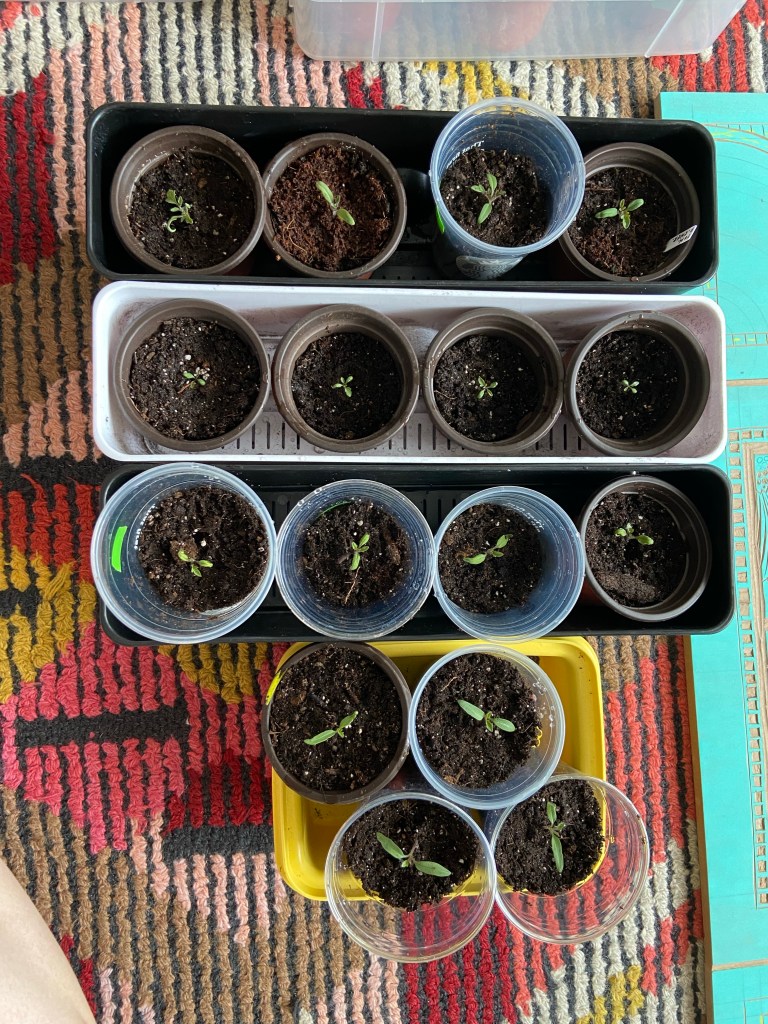
First batch of seedlings have mostly germinated and are ready to move out of the house!
In general I planted lots of extra seeds and thinned them out to extra plants as well. I intend to plant 1-2 of each probably, but it’s always good to have a few backups. I’d like to thin out the remaining seedlings as well but have a space issue.
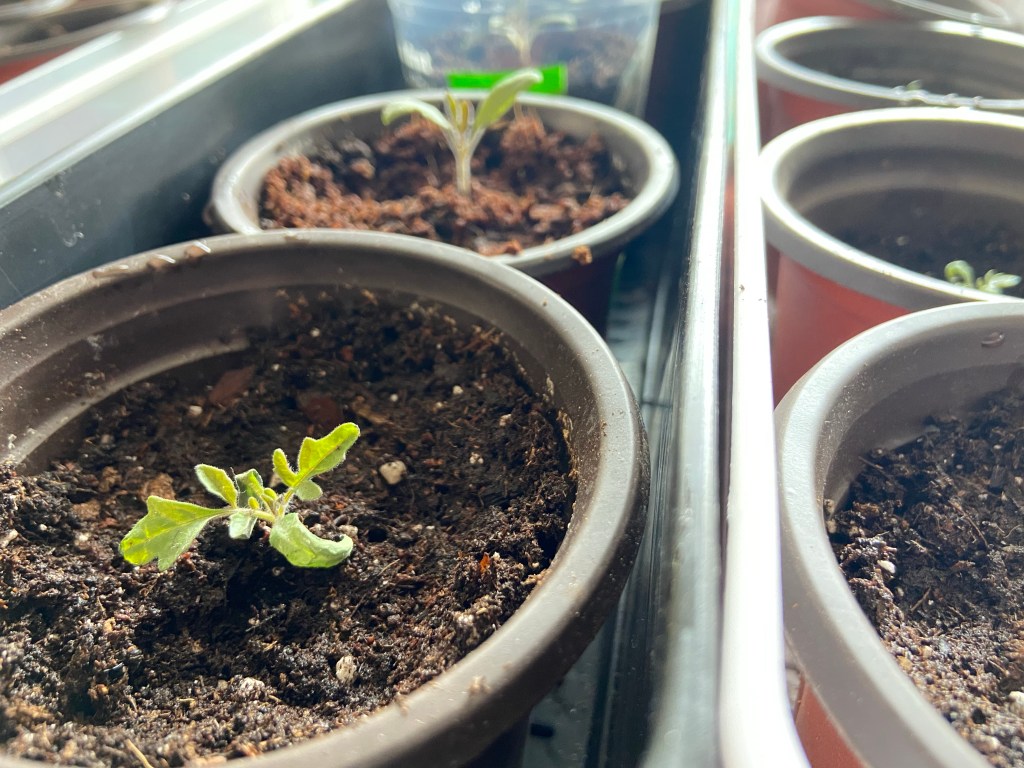
Tomatoes- I transplanted 4 of each, for now, because that’s what I have space for. I’ll keep the ones in the plug tray going a bit longer and see if I can find homes for them. Tomatoes were planted as deep as possible up to their little leaves to maximize root development along the stem. I used taller clear takeout cups for many so that I can continue to bury more stem as they grow.
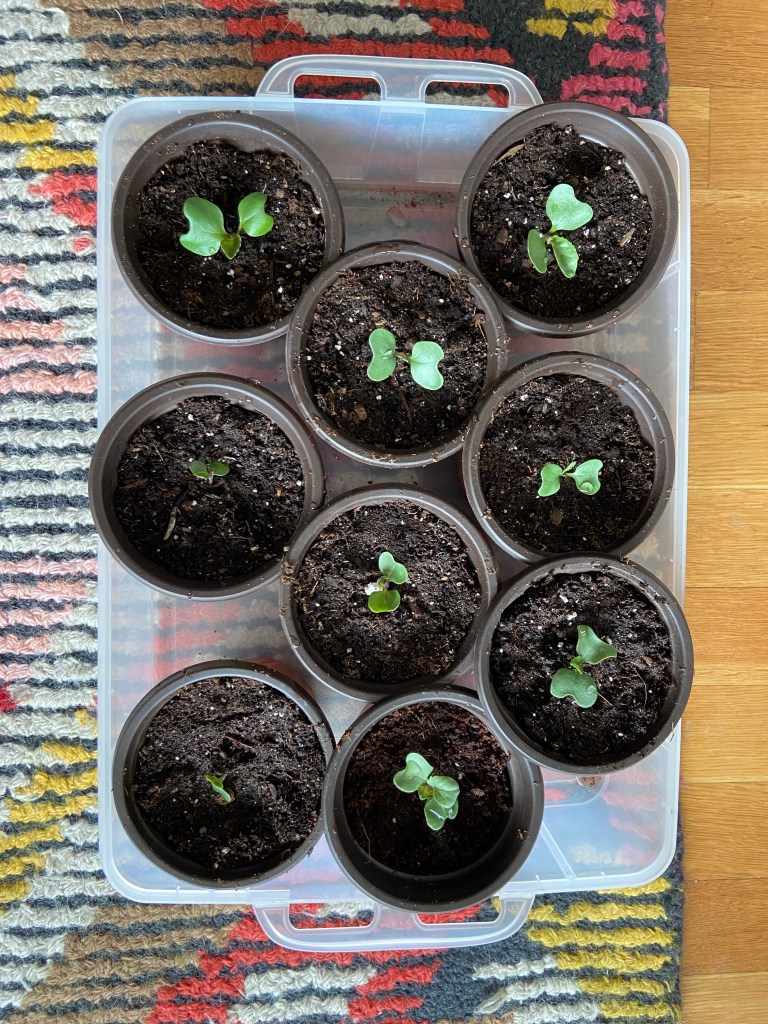
Brassicas- I dunno, I didn’t really have a plan for these in my garden but they’re cooler weather crops so they seemed like something I could transplant a little earlier than the rest. Plus I think they all looks pretty cool. I’ve got cabbage, Brussels sprouts, and broccoli. Although they look pretty different as adults, it’s clear from the seedlings that these guys are related! Very cool.
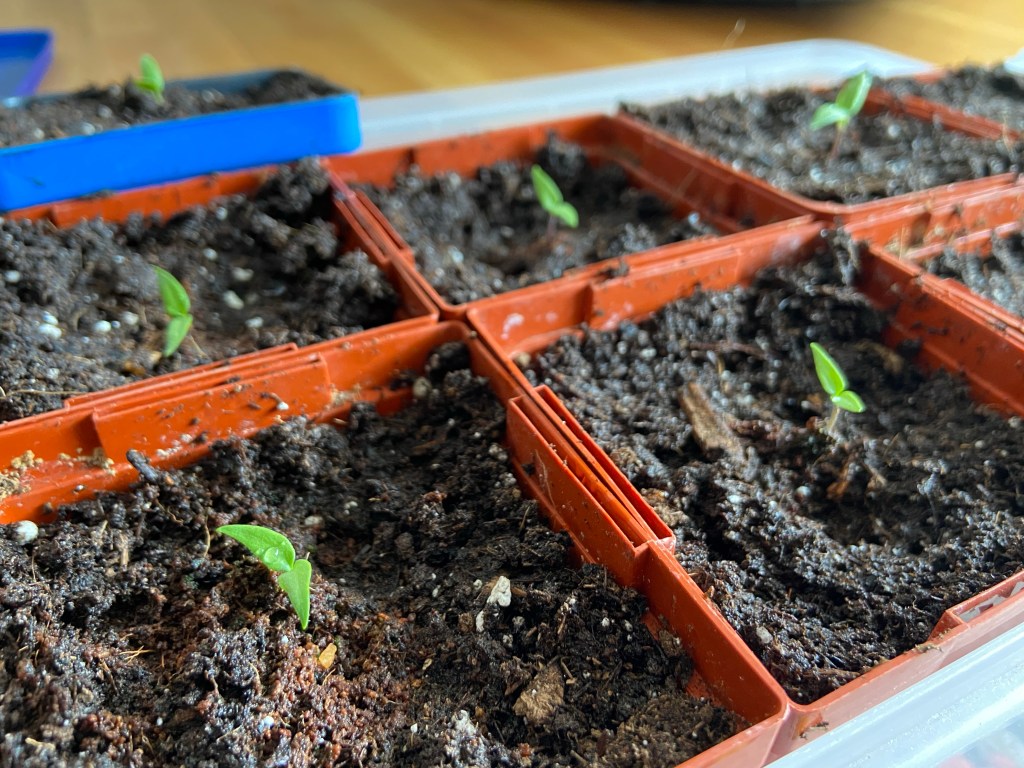
Peppers- the peppers are the slowest to germinate and develop roots, and grow, so I’ve got them thinned out into space-efficient square pots where they’ll likely live until transplanted outside. I’m growing biquinho and poblano, may also start some shishitos because I got some free seeds.
Tomatoes: ping pong, sweet red cherry, san marzano, and currant tomatoesBebe tomatoesPeppers: biquinho yellow and red, poblanosBebe peppersBrassicas: cabbage, Brussels sprouts, broccoliBebe brassicasCurrent occupancy in the guest bath grow house
Obviously I’m about to have a crowded grow house, again, and the tomatoes and peppers are going to be long-term guests. I will soon face a decision about expanding the grow house to another shelf or two and adding more lights.
This really makes me want a greenhouse. In a month or so when temps are better I may explore mini yard greenhouse options, even if it’s just putting things out in clear plastic totes.
I find that gardening has an overwhelming amount of information at any given time about any number of factors. In times of information overwhelm, I find myself craving order in the form of a spreadsheet (or several). So, I’ve been developing a gardening database since last year and it has made seed starting / planning slightly easier this year. Here’s how the planning part of my database is set up:
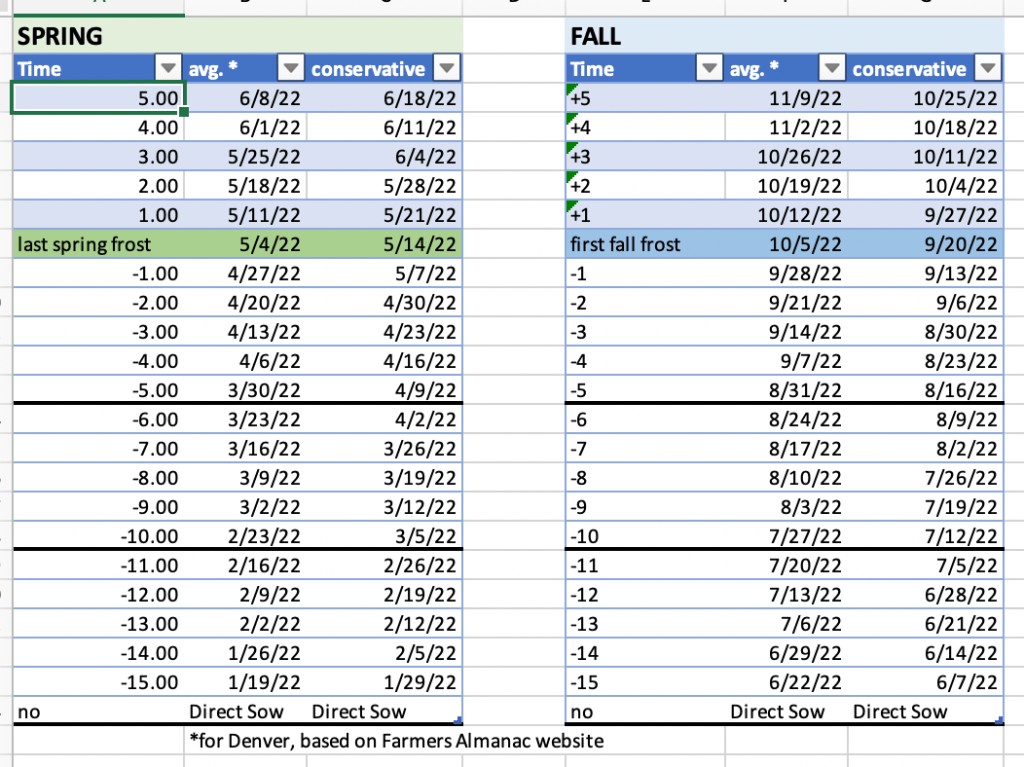
Table 1: The Timing Table. This is based on the Farmer’s Almanac average last spring frost and first fall frost dates for my area. Since most sowing recommendations are written as “x weeks before” or “x weeks after”, I just worked backwards and ahead from the Almanac dates to get a nice cheat sheet for calculating the dates. The next table also uses these to “look up” dates based on the recommended # of weeks before / after the frost dates.
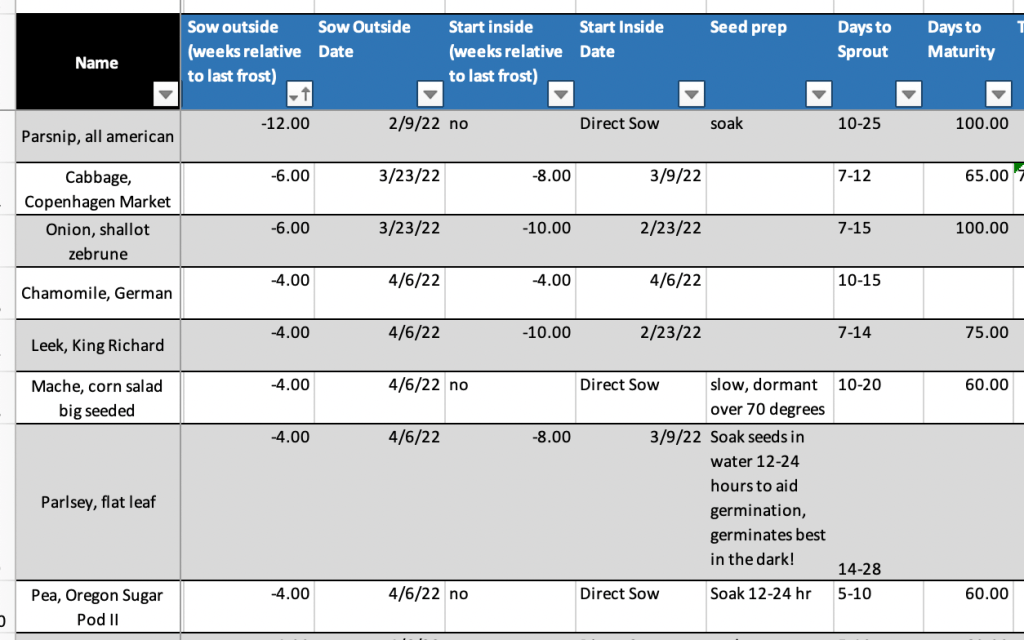
Table 2: The Plant Catalog. I take info from the seed packets and populate a table with all kinds of info. Below is the section of the table where I’ve pulled in the recommendations for sowing indoors and/or outdoors “x weeks before last spring frost date” from the seeds, and used a formula to turn that into a date.
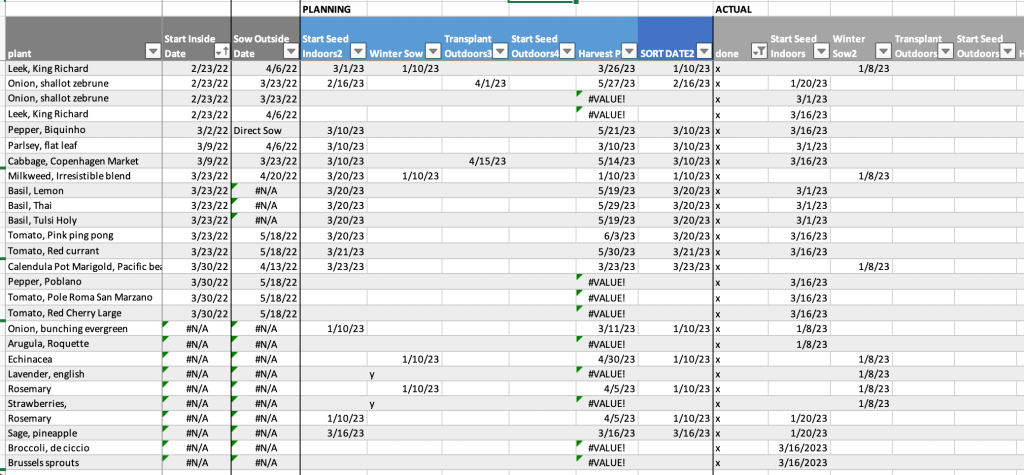
Table 3: The planning table. This is where I make my plan and record what I’ve actually done for seed starting. It pulls in info from Table 2 to pre-populate Start Inside Date and Start Outside Date. That helps me pick a good planning date to start the seeds for a particular plant. I pick a plant, populate the planning section with some dates, and then each weekend I can basically look at which seeds I should be thinking about starting. Then, when I actually sow some seeds I put that date in the “Actual” section so I can have that info for next year / later.
Yes, I realize this is overkill for a hobby garden. However it genuinely helps me to worry about it only once, and then trust the system so I can actually be a little less rigid with my schedule knowing that I have established some reasonable estimates for myself. It has helped prevent my mistake from last year of just starting everything in January (although lets be honest I had all of the same info last year I was just bored and impatient…). Plus I just love a system.
Seedlings so far
In addition to the winter sowing experiment, I’ve started several seeds so far!
In the last month I’ve started some pineapple sage, green onions, shallots, a few types of basil, and rosemary. Most of them are happily camping out on my window sill growing slowly until it’s time to go outside.
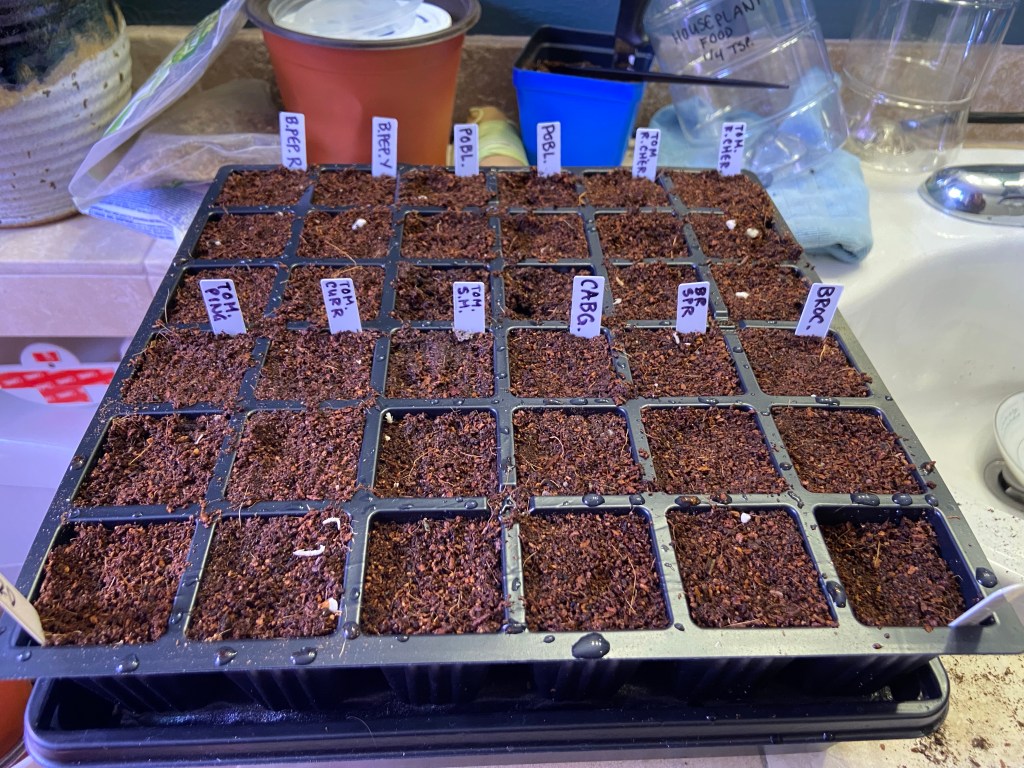
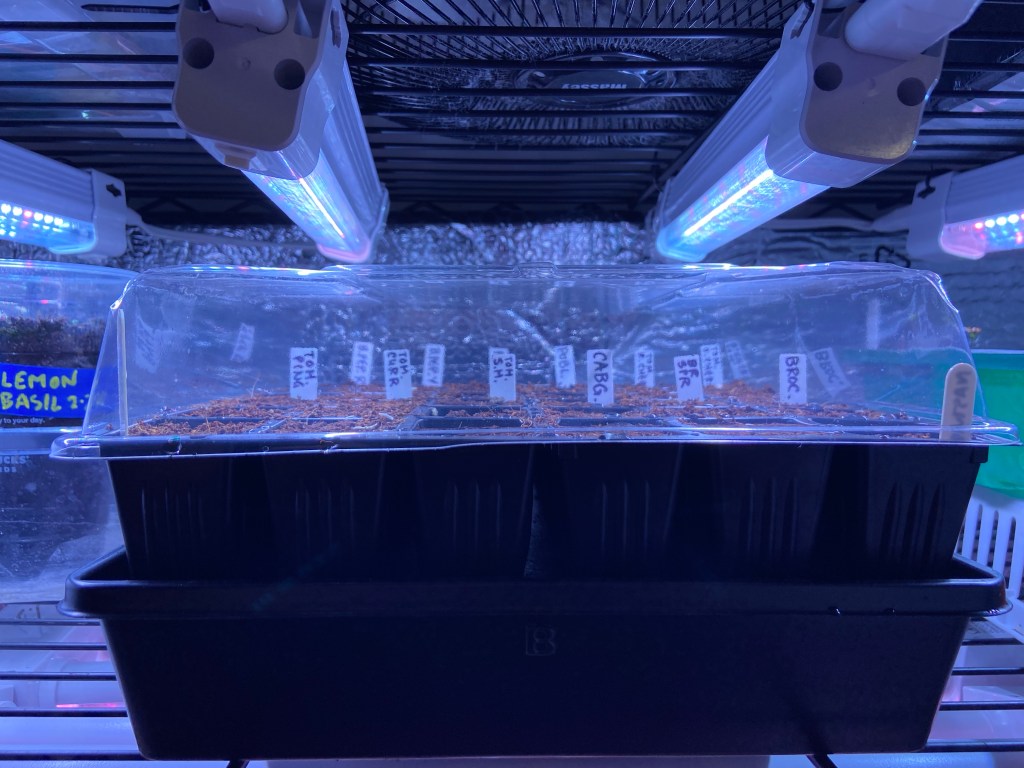
Today I filled this starter tray with a whole army of seeds and things should get exciting. I’ve filled it with plants that I think have a similar growing rate so they should all bump into the lid at around the same time:
Biquinho peppers (red, and yellow)
Poblano Peppers
Tomatoes (cherry red, ping pong, currant, and san marzano)
Cabbage
Brussels sprouts
Broccoli
In the past I’ve mixed plants in the same tray that have wildly different growing rates and had to evict the zucchini before the rosemary had even poke it’s head above ground. I’m hoping I dodged that this time.
Ground truth
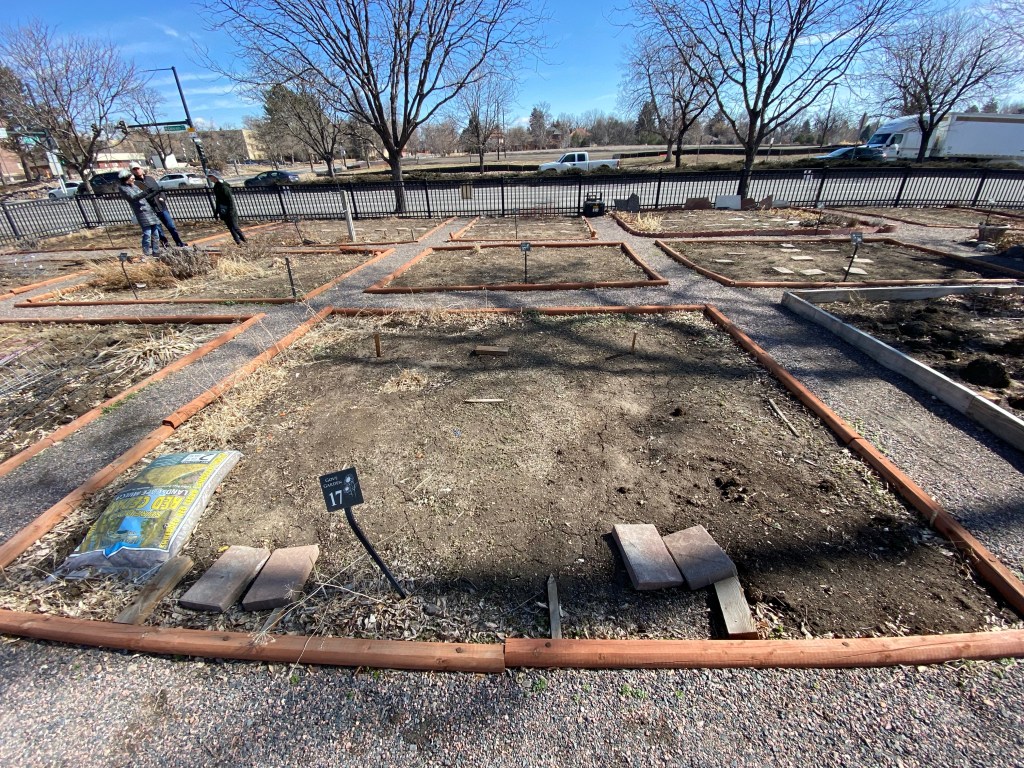
If you recall I have a new plot this year! Last weekend I stopped by the garden for a garden planning workshop and visited my plot with the Master Gardener to pick her brain about planning my layout. The next day I was back to do some weeding and leveling. In the process I removed MANY dill plant skeletons (prepare for a bounty this year) and encountered some grasshoppers, asparagus, and a mystery tuber. Behold the stunning transformation:
This is going to be a long one. To help me resist starting seeds immediately (it’s only January), I’ll meditate on lessons learned from last season.
1. Grow fruit that is a fun color.
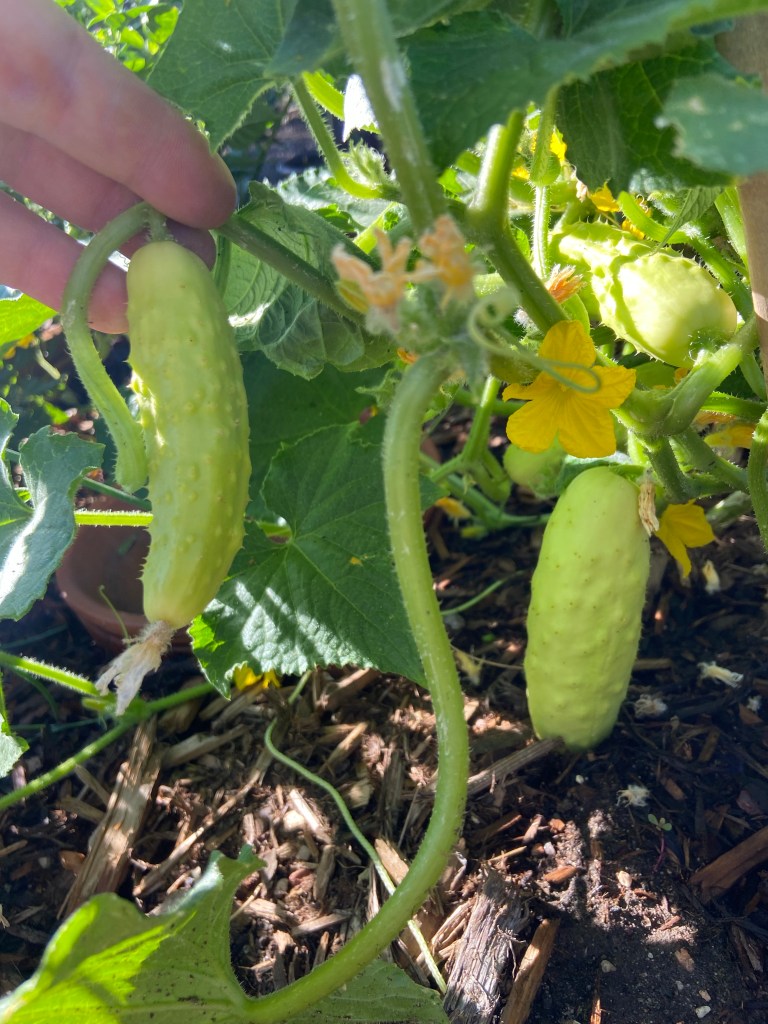
Spot the cucumber?This guy was hiding. Easily spot the cucumbersSilver slicer cucumbers are almost neon green!
It is so much easier to identify stuff that is ready to pick when it doesn’t blend in with the foliage around it. This probably seems obvious but really makes a big difference. The worst hiders were probably cucumbers and beans. Where possible, I plan to grow purple or yellow beans, and the light green silver slicer cucumbers.
2. Connect the ollas
It was an ergonomic nightmare to bend or crouch down with a hose and a funnel, getting the flow rate just right, and waiting for each olla to refill. I’ve seen people connect them, and think that would be a worthwhile endeavor to reduce the number of watering points. If possible I’d also bring the inlet up higher and have a permanent funnel attached. I waited on executing this to see if they lasted, and to see if I want to change up my layout before I commit.
3. Start seeds indoors a little bit later
This year I was really excited to start seeds, and I started some as early as January. For some, like herbs that grow fairly slowly, this was fine. By March I had a mature zucchini plant producing a small zucchini growing in my living room. Needless to say, the larger plants got a bit unwieldy keeping them all in my living room until it was warm enough to start hardening them off outside. This year I plan to only start the very slowest growers before April.
4. Cover the greens
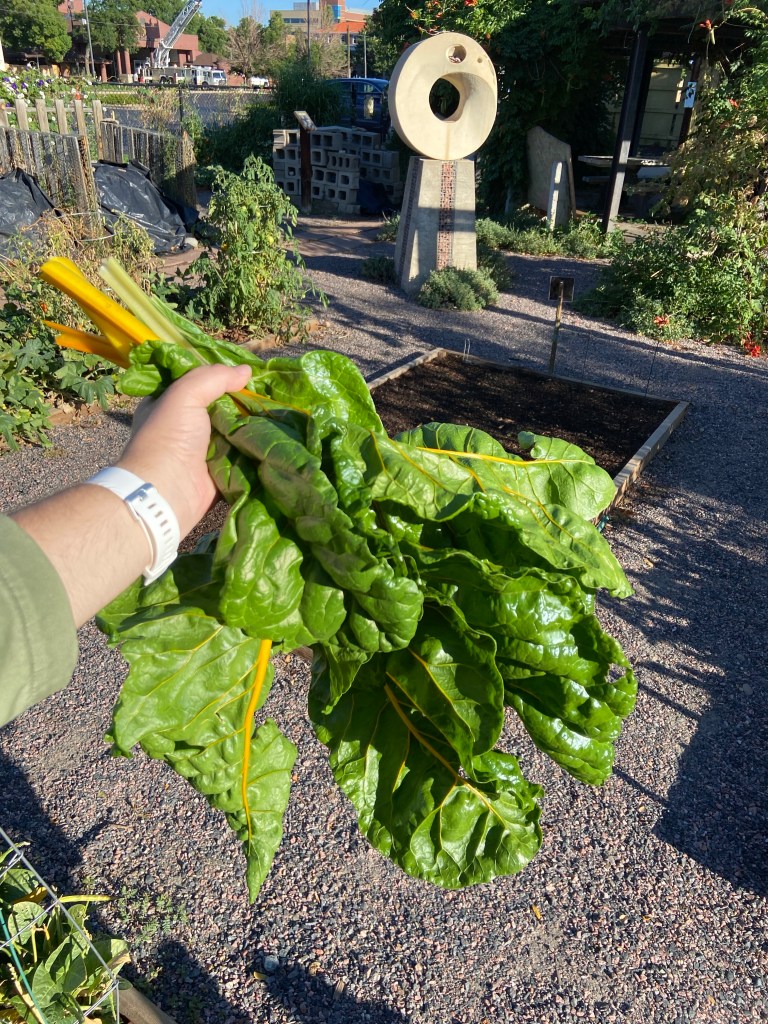
I discovered this year that my leafy greens (chard, arugula, spinach, etc.) were popular with some destructive critters like aphids and leaf miner flies. My options were to spray a highly effective organic substance ON EACH LEAF FRONT AND BACK only when the bees aren’t out like after dark (I did that exactly once before deciding that wasn’t going to work for me), or to cover greens with a fine mesh net to prevent leaf miner flies form landing on the greens in the first place. The garden manager swears by the latter method. That is my plan for this year: constructing a mesh hoop house for greens that don’t need pollinators. If that doesn’t work, I might just nix the greens.
I did find that at the peak of summer it seemed to be too hot, or my chard was vigorous enough that the leaf miners were not an issue any more. They returned in the fall, however.
5. Level and ditch for irrigation
Turns out even on a small plot thinking about where the water is going to flow when you surface water is a good idea. I tend to water at the base of plants to avoid leaf issues, and having a trench to water in was really helpful (especially for things like beets and radishes that get big leaves that can be hard to water around).
6. Make room for zucchini
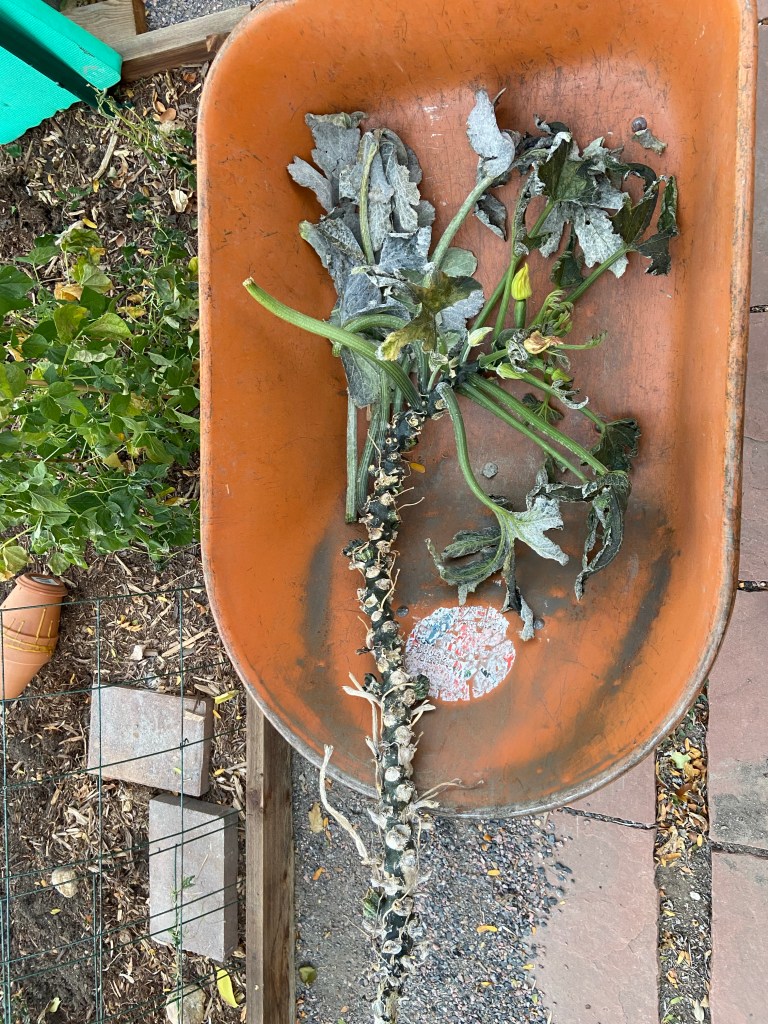
Before this year I only grew zucchini in pots. In Alaska. Growing in-ground at peak summer yielded a giant, constantly growing plant. By the end of the season, the main stalk grew about 4 feet long. The poor plants I rooted nearby didn’t stand a chance. The zucchini plant basically plowed through the surrounding plants and blocked out a lot of light. Next year I’d like to plan accordingly by leaving empty space later in the season or… going more vertically. Like a squash ramp or something. We’ll see.
7. Wait to go vertical until the soil thaws
It’s hard to pound posts into frozen ground. Most of the vertical plants are not happy in the cold weather anyway (cucumbers, squash, beans). The only exception would be for peas.
8. Have a frost plan
Frost came late this season, and I was scrambling to deal with it. It all went fine, but I think I’ll try to keep it in mind setting up my young plants in case I need to get them covered in a pinch.
9. Embrace the journey
I was fortunate this year to have a beginners mindset, and generally approached the whole season as a data-gathering year. It was easy to move on from failures because my only goal was to learn what did or didn’t go well. I’m hoping to keep this attitude into this season. I’m not growing things to stay alive. It’s ok if something dies.
10. Keep track of the main vine
For vine plants (butternut squash, cucumbers, indeterminate tomatoes, etc.) I like to prune them fairly aggressively to reduce sucker vines apart from the main vine. This keeps the energy more concentrated on the main vine and in theory yields more fruit as long as the season supports the plant. In the peak of the season all of these plants grew like crazy and easily got away from me. I think I’m going to try marking the main vine as it grows so it’s easier to chase back when I want to prune. If you accidentally prune the main vine, the plant won’t grow any longer, only branch out broader.
11. Have a plan for using produce
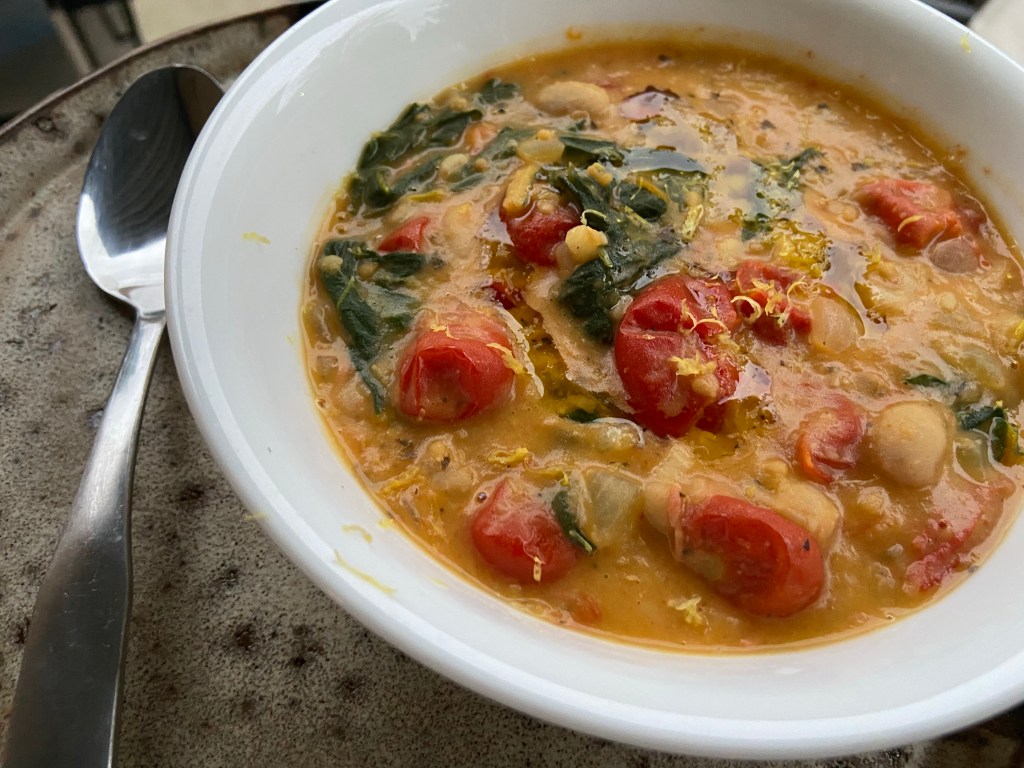
I grew a little bit of everything this year to see how I liked things, without much plan for what to do with edible plants when I picked them. I’ve not got some good techniques for preserving some things but I definitely had a fair amount of waste for things that needed to be eaten quickly like tomatoes and cucumbers. I’m not a big pickling fan, but I figured out I can roast or blanch then freeze most things. I’ve also identified some friends who appreciate being fresh veg donees and help me eat things.
12. Have a plan to prevent damp seedlings
Last year my seed starting operation got shut down at a certain point because of some kind of systemic issue. I’m not entirely sure, but the symptoms seemed to align with what other describe as “damp”, or mold? I live in a fairly dry climate so I didn’t anticipate this. I’d like to prevent this this year. I already cleaned most of my seed starting stuff really thoroughly so hopefully it won’t carry forward. I’m planning to do a few things to help like increasing air flow, keeping my main potting soil stockpile in a breathable container, and cleaning things thoroughly between batches. Fingers crossed I won’t suffer the same fate.
13. Plan for 50% loss
From the number of seeds sprinkled in starting trays, to then transplanted into started pots, then planted in the ground, most things I planted lost about 50% of plants along the way. At first I thought I had way to many seeds started, but in some cases I lost all but one or two by the time they were transplanted. Some of this is a result of the damp mentioned above, and some of it was a result of running out of space to properly harden off plants while it was still pretty chilly.
14. Blog about it
Turns out blogging about it was fun, and a really helpful way to motivate me to reflect on things that worked, and things that didn’t, and celebrate my successful harvests!
15. Be patient
I want to start seeds right now. If I do, I will run out of space. Also I want to fix issues with any plant immediately and I want the remedy to work immediately. In some cases letting it play out worked out fine.
16. Fungicide
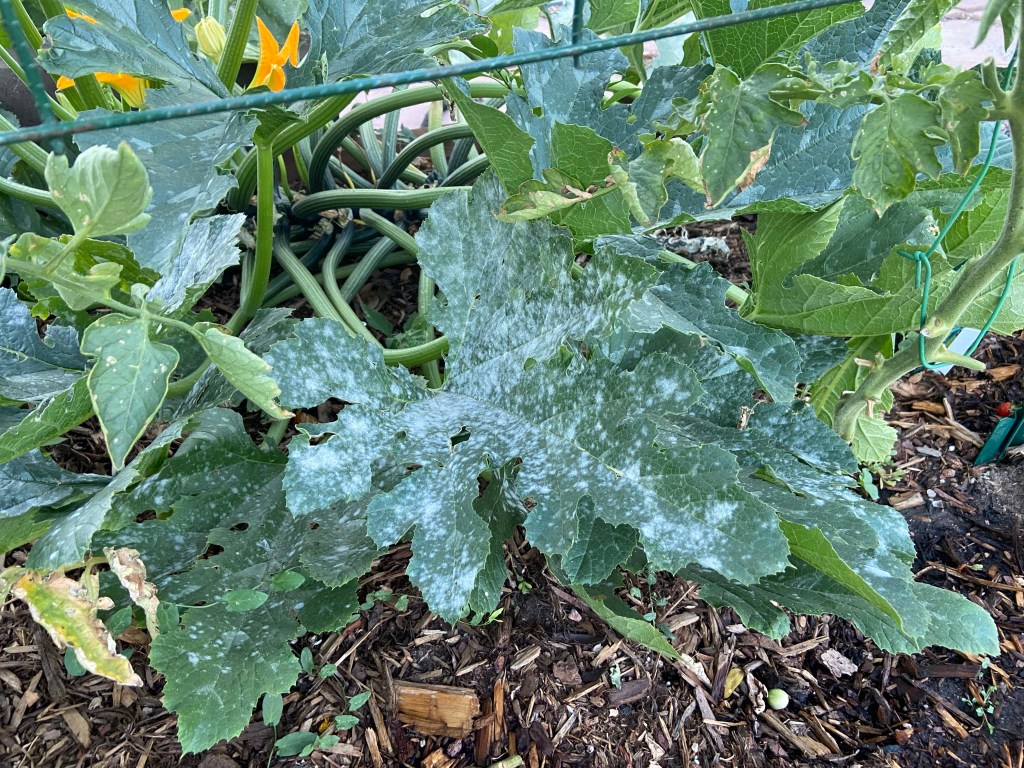
I got powdery mildew on several squash / cucumber plants a few times in the season. The prevailing wisdom says to treat the plants before the mildew even begins, or right when it starts before things get bad. I’m planning to apply some preventative fungicide spray this year to keep my squash plants healthy.
17. Cedar mulch is ok
I second guessed my decision to use cedar mulch in my beds because of all of the conflicting info about using cedar mulch around vegetables. I think it was fine, and it definitely helped with preventing weeds and keeping the soil cooler. No plans to overhaul mulch.
18. Soil makes a difference
I had two plots, right next to each other. All other things being equal, one plot was simply more productive than the other, even with similar plants. I suspect it was something in the soil. As I’m switching plots this year, the mystery will continue. This also applies to my seeds starting operation, which I already addressed.
19. Sluggo is not the answer
At some point my plants in my yard were under slug siege because of the abundance of moisture, shade, and slug food. I put out beer traps, but sought something more nuclear. I put out sluggo (bait/poison for slugs). Later that day I watched large birds and squirrels immediately dig up and eat all of the sluggo within a few hours. It can’t be good for them, and it didn’t last long enough to help with the slugs. I’ll be looking for other ways to prevent slug takeover.
20. Support your squash
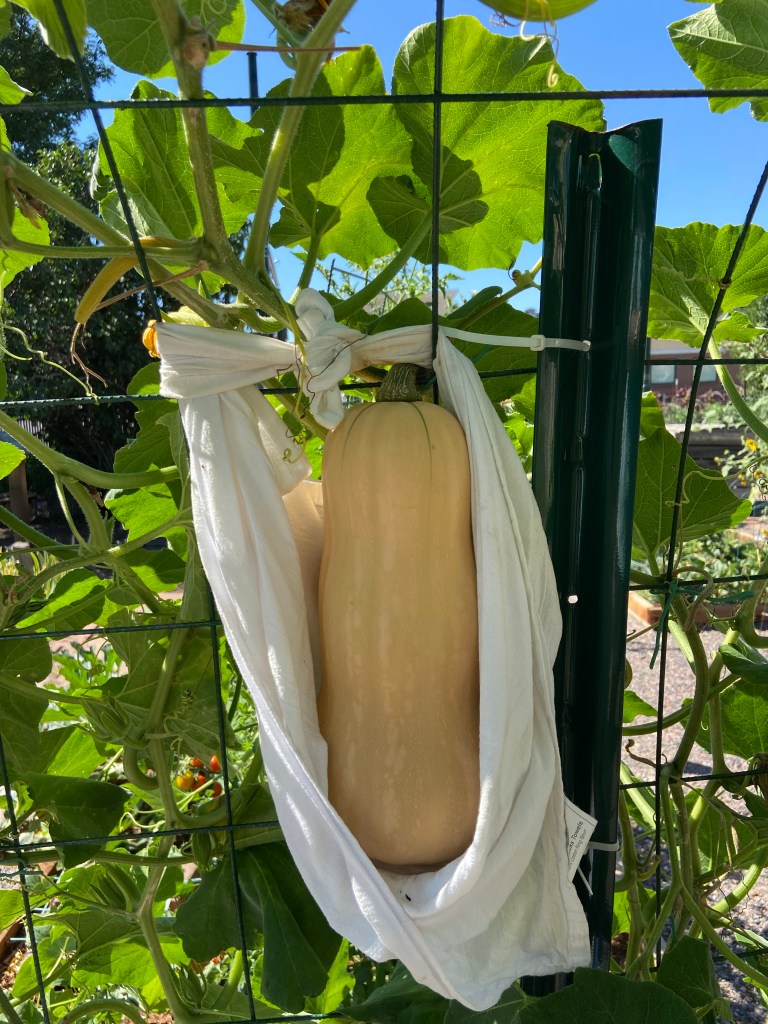
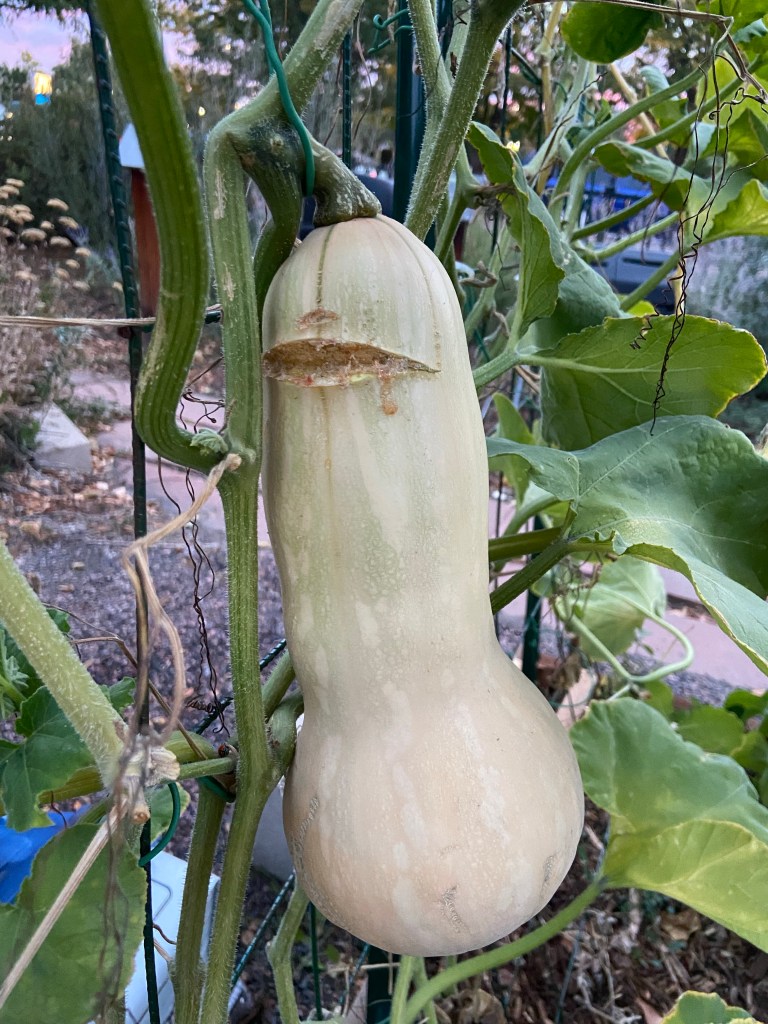
I grew my butternuts up a trellis. My research told me to support the squash as they grew. I did that with the first two. After picking them I though, I bet the plant can handle these, I don’t need to support them. As the squash got quite large, they split a few inches below the top of the gourd (not at the vine or the stem!), forming a permanent deep crack in the side of the squash. They weren’t viable anymore once they started oozing. I’ll plan to support them all this year.
New challenges
I’m looking forward to some new challenges this season:
New, bigger plot! I’ll have to figure out the soil and a new layout. I also observed that it comes with a healthy dill population built-in.
New seeds. I bought a bunch of new seeds to try. On top of my list are luffa gourds (grow my own sponges!), delicata squash, some new bean varieties, and larger tomatoes.
Old favorites. I’m excited to proceed confidently with some of my star performers: butternut squash, sugar snap peas, fordhook zucchini, silver slicer cucumbers, green onions, biquinho peppers, chard, and spinach.
Irrigation updgrades. I plan to install ollas in the new plot, but hope to connect them to make watering the system easier.
TOWER. OF. WORMS. I’d like to try an in-ground composting worm tower. Seems like an easy win, basically feeding the worms that are already living in ground in the garden, having them break down scraps and turn it into worm castings.
Yeah, I could probably keep growing my root veggies in the grow tent but I’m calling it for the season.
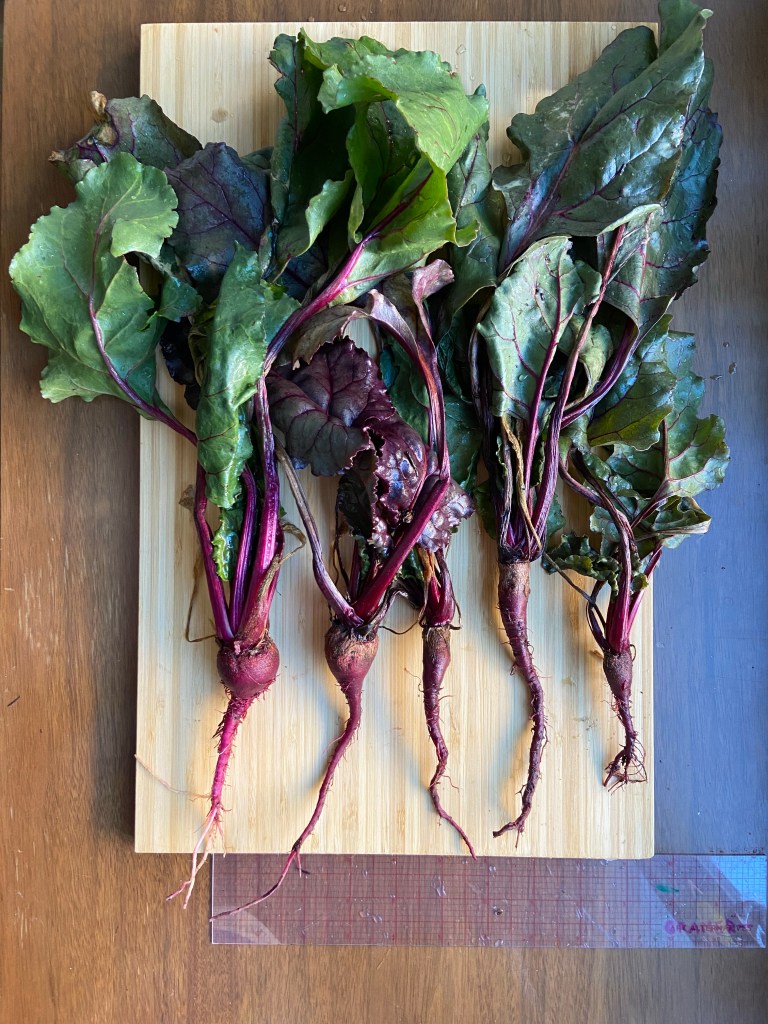
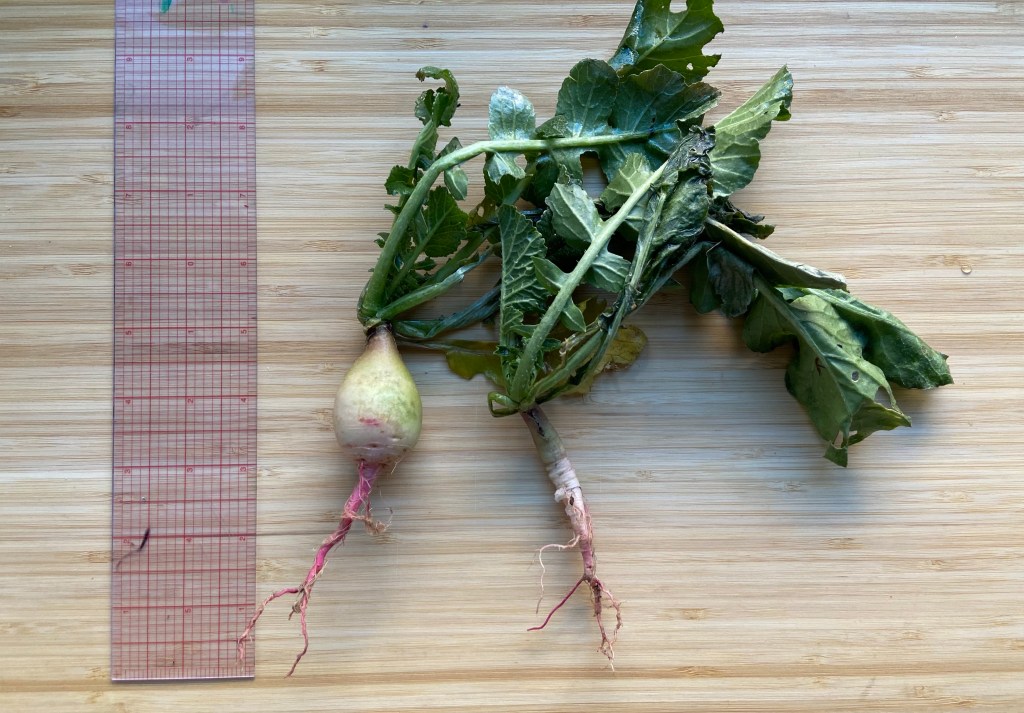
Here’s what came out of the ground today. Beets are sadly not grown in but beautiful nonetheless. Carrots all planted at the same time had wildly varied growth rates! Watermelon radishes made a good final effort. Overall I would say that I should have harvested some greens pre-frost (they got kind of icky), and should have started everything earlier to make sure they were farther along before the frost. I also believe that they’d continue to grow if left in the grow tunnel.
General update
I found out a few weeks ago that I got approved to move to a larger plot. It’s about 33% larger as far as I can tell, and all one rectangle instead of two separate ones. It also appears that I will not have to worry about planting dill, as it comes with its own crop.
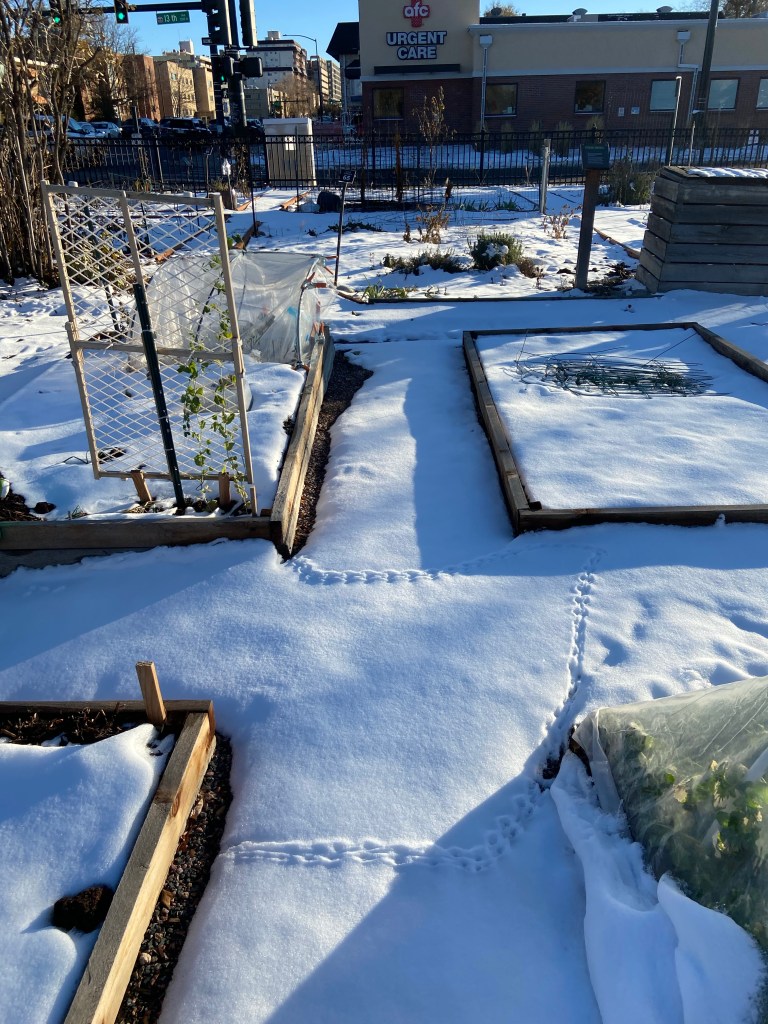
Final look at the plots before calling it a season. The last harvest victims before extractionMice are still activeMouse highwaysThe new plot! Exciting, no?New plot looking north














 ROAD TRIP